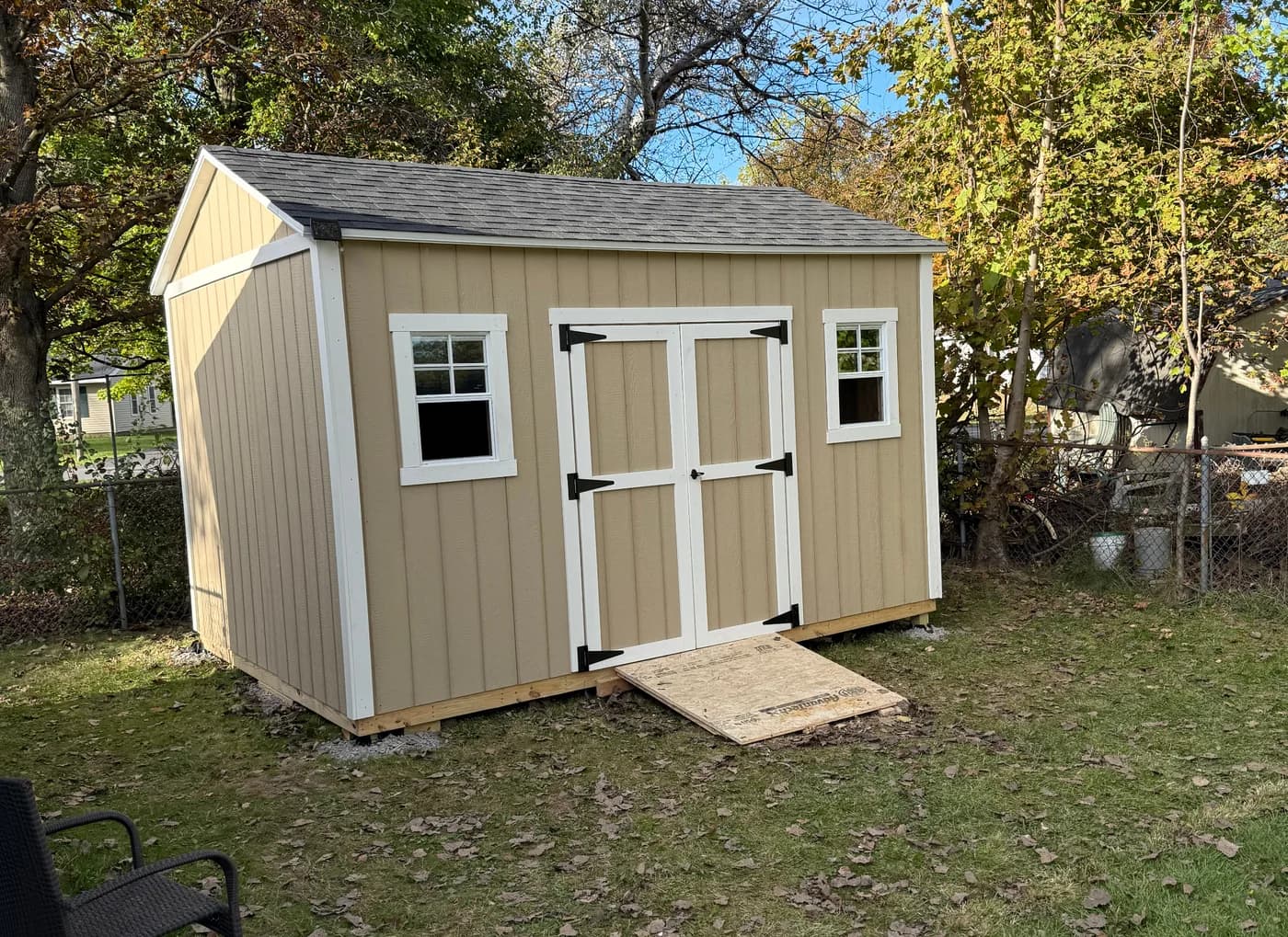
The right shed size starts with what you need it to do. A place for garden tools needs a different layout than a home for a mower, bikes and seasonal storage. Before choosing dimensions, think about how you’ll use the space every time you open the doors.
Start with a storage list
Write down everything you want to move into the shed: mower, snowblower, bikes, wheelbarrow, garden tools, outdoor furniture and seasonal bins. Include things you expect to add later, too.
Measure the widest and longest items, including handles, mower decks and attachments. A rough floor plan on graph paper will tell you more than a size label alone.
Leave room to use the space
Fitting everything inside is only half the job. You should be able to reach the items you use most without unloading the shed first. Draw in shelving, a workbench and a route from the doors to your equipment.
Try marking a possible footprint on your lawn with string or a garden hose. Walk through the layout and imagine moving your largest item in and out. If it already feels tight, compare the next size up before deciding.
A few sizes to compare
Use these examples as a starting point for your floor plan. Dimensions are in feet; the areas below are width × depth, not guaranteed usable interior space. What fits depends on your equipment, wall thickness, doors and layout.
| Size | Footprint | Planning idea |
|---|---|---|
| 8 × 8 | 64 sq ft | A compact footprint to sketch out for garden tools, bins and smaller yard equipment. |
| 8 × 12 | 96 sq ft | More depth to plan around bikes, a push mower and shelving. |
| 10 × 12 | 120 sq ft | Extra width to explore a mix of equipment storage and a clear walkway. |
| 10 × 16 | 160 sq ft | A larger layout to consider for bulky equipment or storage alongside a workbench. |
| 12 × 16 | 192 sq ft | More room to plan separate storage and work areas, if your yard allows. |
Think about doors as well as floor space
A shed can have enough floor area and still be awkward to use if the entrance is too narrow or badly positioned. Compare the clear door opening with your largest piece of equipment, and leave space outside to approach and turn.
Door placement, shelves and windows all affect the layout. Discuss them together rather than choosing the shed size first and trying to squeeze everything in afterward.
Make the footprint work in your backyard
Look at the space around the shed as well as the shed itself. Think about your route from the house, access to the doors, roof overhangs and room to maintain the exterior. Confirm any placement or approval requirements for your property before settling on a location.
CNY Sheds builds on-site, so a delivery truck does not need to reach the shed’s final position. You can see examples of completed backyard builds in our project gallery.
Bring your measurements and ideas
You don’t need a finished design to start planning. A storage list, measurements of your largest items and a few photos of the proposed location make a useful starting point.
Choose a size that works for your everyday routine and leaves some flexibility for the future. The best layout is one you can use comfortably, with a place for the things you actually own.